
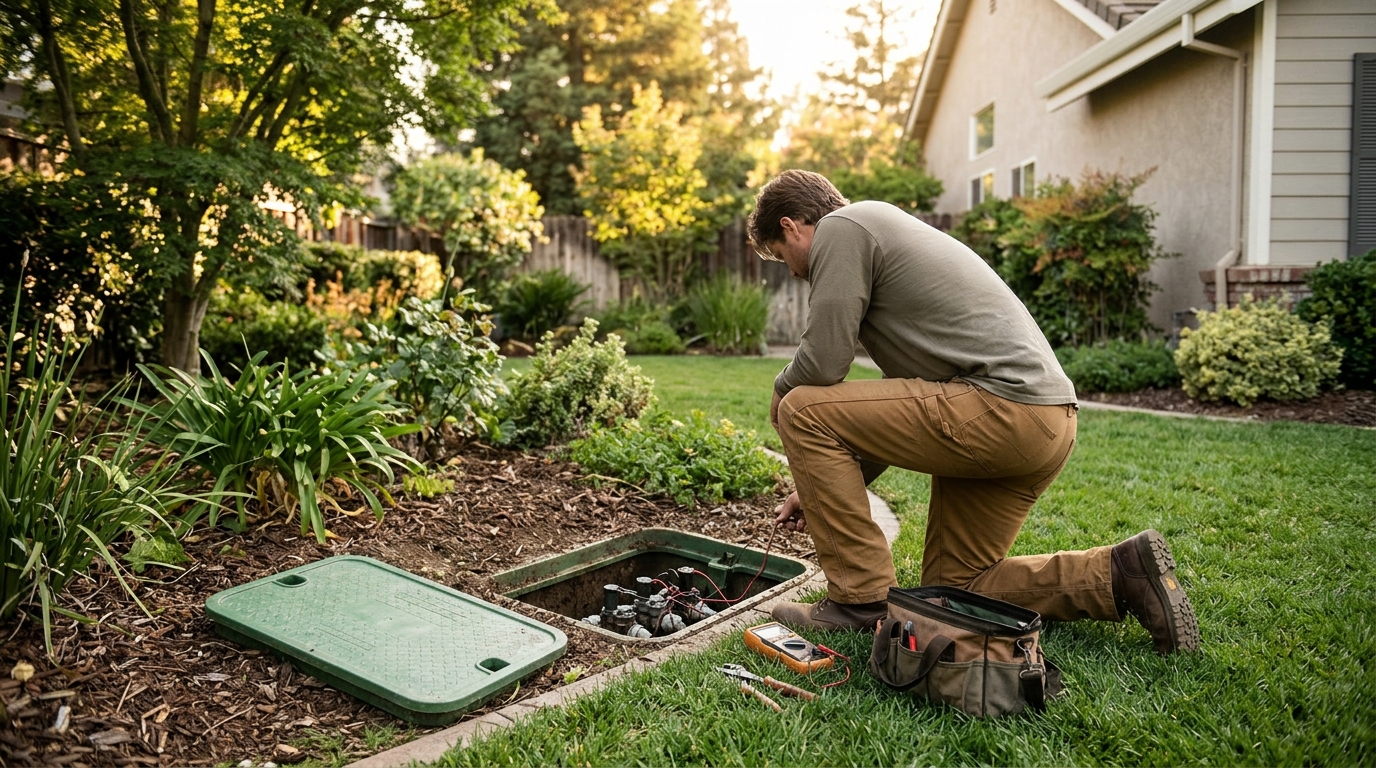
Fixing a dead sprinkler zone typically takes 30 to 60 minutes of focused effort. By following a logical diagnostic path, you can identify whether the issue is a tripped breaker, a stuck valve, or a wiring fault. This guide walks you through the exact steps to restore water flow to your landscape efficiently and safely.
Before You Start
Ensure you have the correct tools and safety gear before beginning. You will need a multimeter, a screwdriver, and a flashlight. Wear work gloves and safety glasses to protect against sharp metal edges and potential electrical hazards. Confirm that the main water shutoff valve is accessible and that you know the location of your irrigation control panel.
Step 1: Check the Main Water Supply
Verify that water is actually reaching the irrigation system. A dead zone is often caused by a closed main shutoff valve or a low water pressure issue from the municipal supply. Open the main shutoff valve fully and check if other zones operate normally. If no zones work, the problem is likely upstream at the main valve or the water meter. If other zones work, the issue is isolated to the specific zone you are troubleshooting.
Step 2: Inspect the Control Panel
Examine the irrigation controller for error codes or tripped breakers. The controller is the brain of the system, and a tripped internal breaker is a common cause of a single zone failing. Locate the small reset button or breaker switch on the controller faceplate. Press the reset button for the affected zone and wait for the system to attempt to run. A correct result is the solenoid clicking and water starting to flow. If the breaker trips immediately again, there is a short circuit in the wiring.
Step 3: Test the Solenoid
Manually activate the valve solenoid to bypass the controller. The solenoid is the electromagnetic component that opens the valve. Use a screwdriver to turn the solenoid cap clockwise until it stops. This manual override forces the valve open regardless of electrical signals. If the valve opens and water flows, the solenoid is likely faulty or the controller is not sending a signal. If the valve does not open manually, the problem is mechanical within the valve body itself.
Step 4: Verify Wiring Integrity
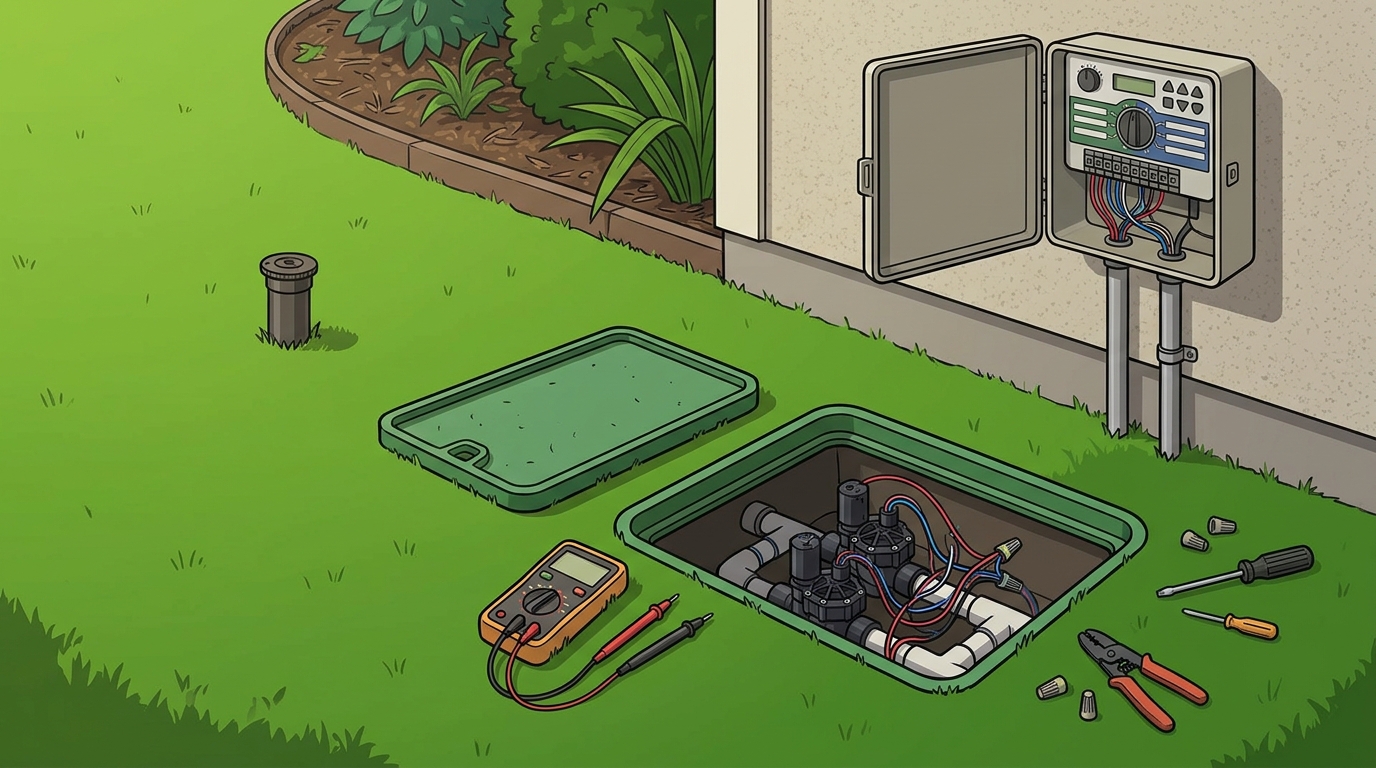
Check the voltage at the valve to confirm the controller is sending power. Use a multimeter set to AC voltage to measure the connection between the common wire and the zone wire at the valve. You should read between 24 and 28 volts AC. If you read zero volts, the wire is broken or the controller is not outputting power. If you read voltage but the valve does not open, the solenoid is defective. A correct result is a stable voltage reading that matches the controller output.
Step 5: Examine the Valve Body
Inspect the diaphragm and spring inside the valve for debris or damage. Remove the valve cap and lift out the diaphragm assembly. Look for dirt, sand, or mineral buildup that may be preventing the diaphragm from sealing or moving. Clean the diaphragm and the valve seat with a soft cloth. Reassemble the valve and test it again. A correct result is a smooth, unobstructed diaphragm that allows water to flow freely when the solenoid is activated.
When It Goes Wrong
Frequently Asked Questions
Why does my sprinkler zone work sometimes but not others?
Inconsistent operation often points to a failing solenoid or a loose wire connection. The solenoid may be weak and only activates when the voltage is slightly higher. Check the wiring connections at both the controller and the valve for corrosion or looseness.
Can I fix a broken sprinkler valve myself?
Yes, most valve issues are DIY-friendly. You can replace the diaphragm, solenoid, or the entire valve body with basic tools. Always turn off the water supply before working on the valve to prevent flooding.
What voltage should I see at the sprinkler valve?
Standard residential irrigation systems use 24 to 28 volts AC. Use a multimeter to measure between the common wire and the zone wire. If the reading is significantly lower, the controller or wiring is faulty.
How do I know if the solenoid is bad?
If the valve opens when you manually turn the solenoid but does not open when the controller runs, the solenoid is likely bad. You can also test the solenoid resistance with a multimeter, which should read between 20 and 30 ohms.
Should I hire a professional for sprinkler repairs?
If you are uncomfortable with electrical testing or if the issue is complex, hiring a professional is a good option. Salvador Landscape offers expert irrigation services in the Greater Sacramento area. Our team can diagnose and repair your system efficiently. To schedule a service, you can request a free estimate. Learn more: Salvador Landscape FREE ESTIMATE.