
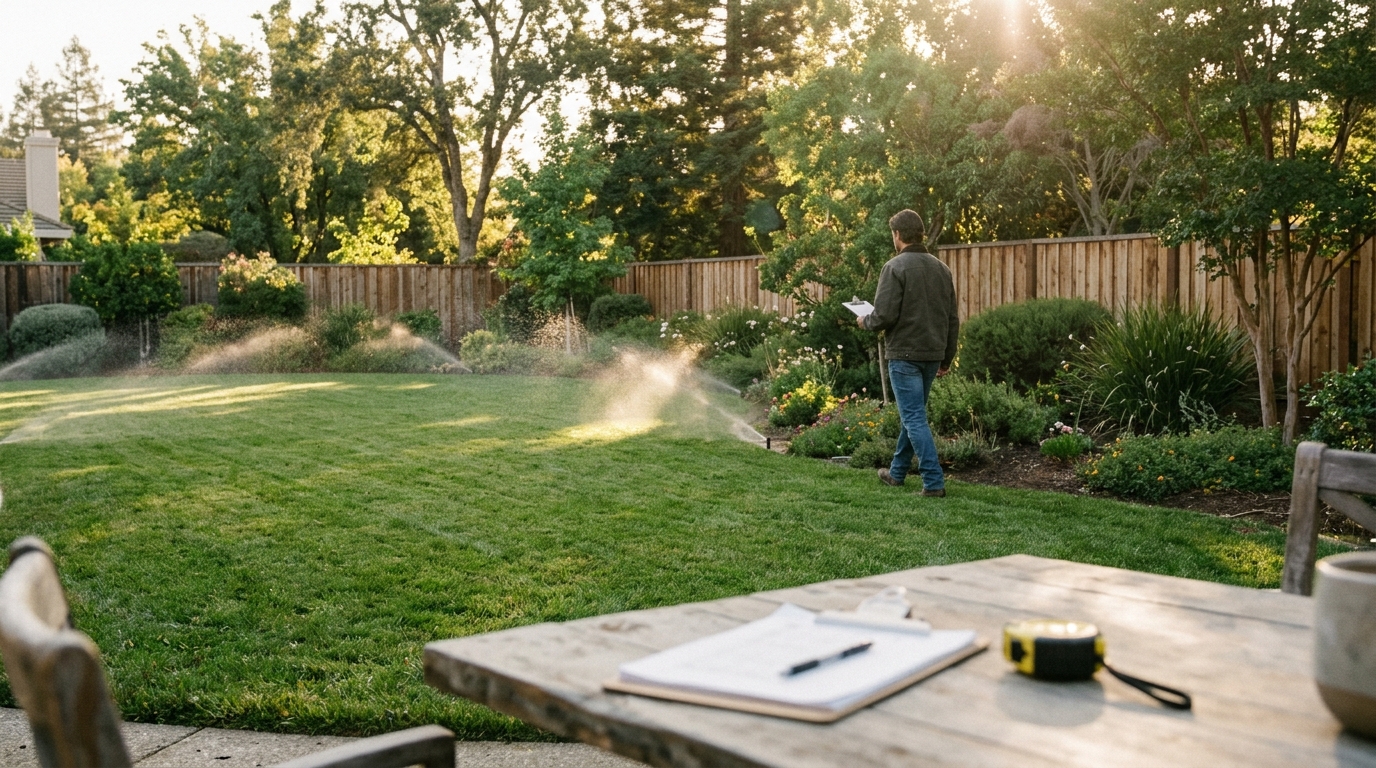
Calculating the cost per zone for a sprinkler system in Sacramento typically takes 30 to 60 minutes of focused effort. You will need your property dimensions, a list of existing zones, and current local labor rates. This process helps you budget accurately for irrigation repairs or new installations. Salvador Landscape, a family-run team serving the Greater Sacramento area, emphasizes that understanding these costs prevents budget overruns. By following this guide, you can estimate expenses with high precision before contacting a professional.
Step 1: Map Your Existing Zones
Map your existing zones to create a visual inventory of your irrigation layout. A correct result is a simple diagram or list showing each zone number and its location on the property. Start at the main water shutoff valve. Walk the perimeter of your yard and note where each zone activates. If you have a manual controller, turn on each zone one by one and mark the area it covers. This baseline map is essential for accurate cost estimation. Without it, you cannot determine how many zones require attention.
Step 2: Measure Zone Dimensions
Measure the dimensions of each zone to calculate square footage. A correct result is a recorded length and width for every zone, even if the shape is irregular. For rectangular areas, multiply length by width. For irregular shapes, divide the area into smaller rectangles or triangles. Use a measuring tape or a laser measure for accuracy. In Sacramento, many properties have sloped terrain or dense vegetation that affects coverage. Record these details as they influence the complexity of the work.
Step 3: Identify Component Types
Step 4: Apply Local Labor Rates
Apply local labor rates to estimate the time required for each zone. A correct result is a dollar amount for labor based on hourly rates and estimated hours. Labor is often the largest portion of the total cost. In the Sacramento area, labor rates vary by provider and complexity. Salvador Landscape offers a transparent approach to pricing, ensuring clients understand the value of professional service. Multiply the estimated hours per zone by the hourly rate. This gives you a baseline labor cost before materials are added.
Step 5: Add Material Costs
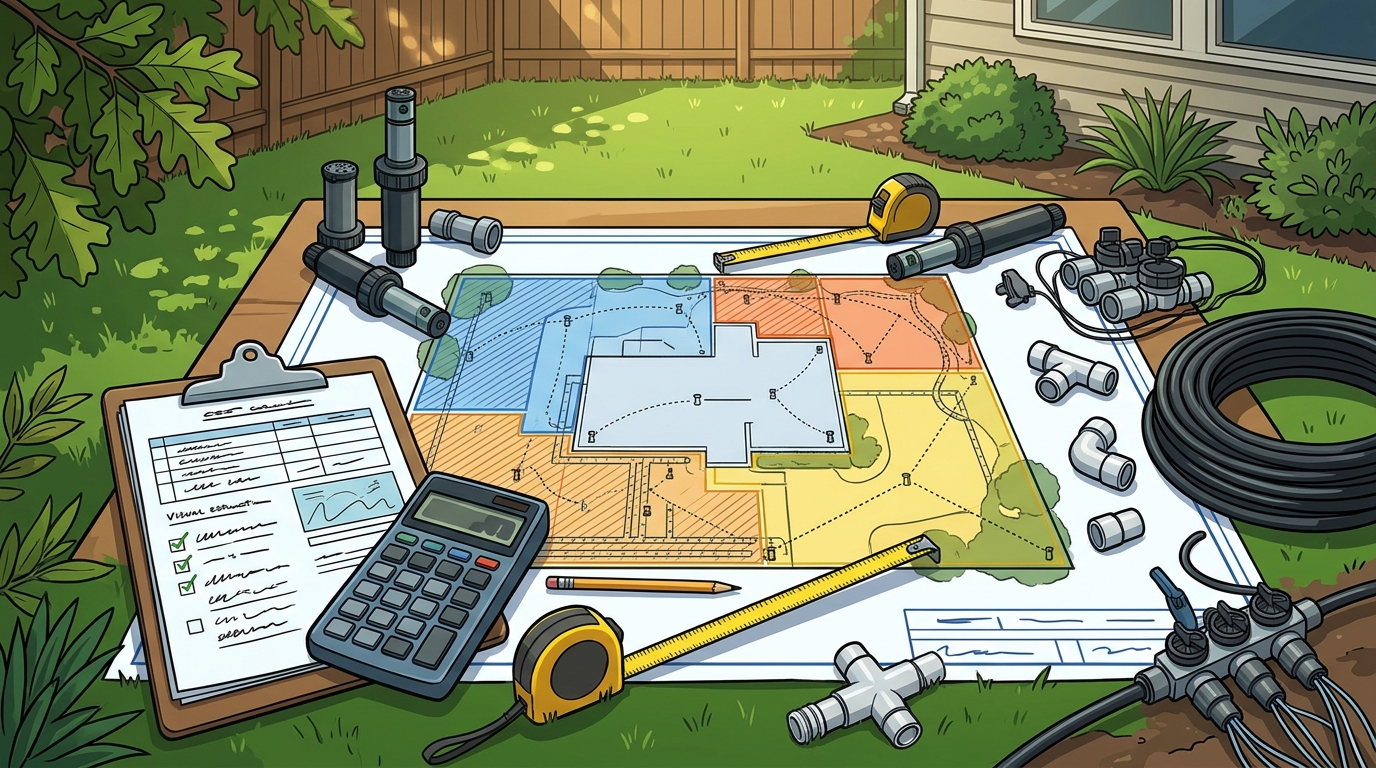
Add material costs for heads, valves, and piping. A correct result is a line-item budget for all physical components needed. Prices for irrigation parts fluctuate based on brand and quality. Standard spray heads are less expensive than high-efficiency rotors. Valves and wiring also contribute to the total. Check current market prices for the specific components you identified in Step 3. This step ensures your budget covers the physical hardware required for the job.
Step 6: Calculate the Total
Calculate the total by summing labor and material costs for each zone. A correct result is a final dollar figure for each zone and a grand total for the entire system. Add the labor cost from Step 4 to the material cost from Step 5. Repeat this for every zone on your map. This per-zone breakdown helps you prioritize repairs or upgrades. It also allows you to compare quotes from different providers with greater confidence. You now have a realistic estimate for your irrigation project.
When It Goes Wrong
Underestimating zone complexity is a common error. Sloped or rocky terrain increases labor time. Fix this by adding a 20% buffer to your labor estimate for difficult areas. Ignoring valve condition leads to unexpected costs. If valves are corroded, replacement is necessary. Fix this by inspecting the valve box during your initial survey. Using outdated material prices results in budget shortfalls. Prices change frequently. Fix this by checking current supplier prices before finalizing your budget. Overlooking water pressure issues can cause system failure. Low pressure requires booster pumps or system redesign. Fix this by testing pressure at the main valve. Failing to account for permits can delay projects. Some Sacramento areas require permits for irrigation work. Fix this by checking local regulations early in the process.
Frequently Asked Questions
How many zones are typical for a Sacramento home?
Most residential properties in Sacramento have between 4 and 8 zones. The number depends on the size of the yard and the variety of plantings. Larger properties with diverse landscapes may have more zones. Smaller lots may have fewer.
What is the average cost per zone in Sacramento?
The average cost per zone varies widely based on scope. A simple repair might cost a few hundred dollars. A full replacement with new heads and valves can cost significantly more. Labor and materials are the primary drivers of this cost.
Do I need a permit to modify my sprinkler system?
Permit requirements depend on the specific city or county within the Greater Sacramento area. Some jurisdictions require permits for new installations or major modifications. Check with your local building department to confirm requirements.
How often should I inspect my irrigation zones?
It is recommended to inspect your irrigation zones at least twice a year. Spring and fall are ideal times for inspections. This helps identify leaks, broken heads, or valve issues before they become major problems.
Can I calculate costs without professional help?
Yes, you can estimate costs using the steps in this guide. However, professional assessments provide more accurate quotes. Professionals account for hidden issues like underground pipe damage or pressure problems that are not visible from the surface.
Conclusion
Calculating the cost per zone for your sprinkler system is a manageable task with the right approach. By mapping your zones, measuring dimensions, and applying local rates, you can create a reliable budget. Salvador Landscape is committed to helping property owners in Sacramento, Granite Bay, and Auburn achieve beautiful, efficient outdoor spaces. To get a precise quote for your specific property, contact us for a professional assessment.